I will be signing books in Chicago!

I will be signing books in the Mystery Writers of America booth at Printers Row Lit Fest in Chicago on Sunday, June 11th from 2:00 to 6:00. I will have copies of the Boystown mysteries to sell or bring your own! Come on down and say hello.


Two-For-One Thriller Duo

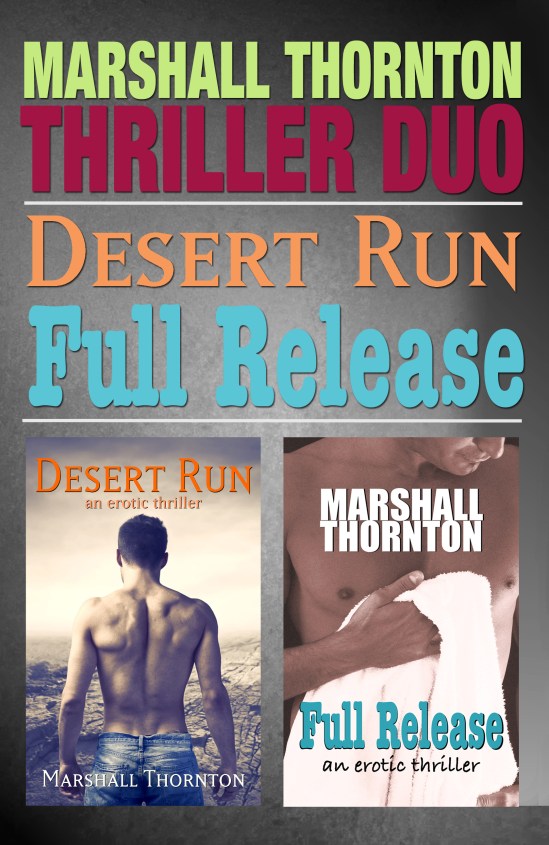
Thriller Duo_edited-1Two thriller novels from Lambda Award-winning author, Marshall Thornton, for the price of one! Includes:

Desert Run

Palm Springs, 1973. On the lam after killing a mobster’s son in a bar fight, Don Harris hides out as a piano player in a Palm Springs restaurant until he’s accidentally found out. Broke and desperate, he walks into an unfamiliar bar where he meets…

Harlan, the secret lover of a well-known movie star. Stashed away in the sleepy resort, Harlan is bored and often alone which is why he’s spending the afternoon at his favorite gay bar.

When the two meet, Don thinks he’s using Harlan for a place to hide out but slowly realizes he’s falling for the kid. Don knows he shouldn’t get involved but can’t help but step in when Harlan gets into trouble. To save himself, Don’s got to save Harlan.

Full Release

Studio accountant, Matt Latowski orders an erotic massage on the one-year anniversary of a bad break-up but is surprised when the masseur calls him a couple weeks later to ask him out on a date. Unable to say no to a freebie, Matt begins a journey that eventually leads to his becoming a murder suspect.

As the police close in on him, Matt is left with no choice but to turn the tables and become an erotic masseur himself in order to find the murderer. Along the way, he meets Detective Aaron Tripp. Sparks fly as Matt wonders whether the detective might be the murderer, or worse, the murderer’s next victim?

Only available until August 15th, 2017


Buy it here.

New Nick Nowak Novella coming soon…

Little Boy Afraid

It’s winter 1980, private investigator Nick Nowak gets one of his first jobs working for an openly-gay senate candidate. Allen Grimley has been receiving death threats, a lot of them, and it’s Nick’s job to keep him alive until the election. As he protects Grimley from increasing dangers, his friendship with bartender, Ross deepens. Prequel to the Lambda Award-Winning Boystown mysteries

The story is available for free at instafreebie.com. Just follow the link.

Writing Satire in the Age of Trump

Back in 2010, I published The Perils of Praline, or the Amorous Adventures of a Southern Gentleman in Hollywood, which was basically the silliest, sexiest book I could think up. It also included a hefty dose of satire, both political and cultural. Over the years fans have asked if I was going to write a sequel. For a long time, I answered maybe. I had originally planned to write two more of the books, the second set in Las Vegas for which I had notes, and the third to be set in Washington. Other projects kept taking precedence and eventually I began answering the question of a sequel with no. Then last summer, I was asked the question again and I said, “No” but then reflected and added, “Unless, of course, Trump wins. Then I may have to.” Of course, I thought this was incredibly unlikely and forgot all about it.

Then, the election happened. Like a lot of the country I was truly shocked and in the subsequent weeks depressed. In fact, I had trouble writing anything since I was so focused on the disaster that had just happened. Until, I remembered that conversation and thought, “Why not? Why not write another Praline book?” and so I began working on Praline Goes to Washington, or the Erotic Misdeeds of a Newly Native Californian in our Nation’s Capitol.

Satire is the art of making comedy by heightening reality to the level of absurdity, in the process exposing the hypocrisy and imagined intentions of individuals or types of individuals. That’s my definition. Miriam Webster’s definition is simpler and, at the same time, less clear: “a literary work holding up human vices and follies to ridicule or scorn.” What I found interesting about writing a satire contemporaneously to the events I was satirizing is that, in this case, Trump and his new administration would either match or exceed the over-the-top heightened reality I was creating. A couple of times, after I’d written something I thought completely absurd it would appear on the news.

In the new book, instead of getting into the whole Russia thing I brought back the tiny (and fictional) principality of Malvania. Helmut Dump’s wife, Melanoma, is Malvanian and so Malvania spreads a lot of fake news to help his campaign. When I wrote that, I knew that Russia has likely involved in the hacking of the DNC and the subsequent distribution to Wikileaks. That they were also involved in spreading fake news stories did not come to light (or at least to my attention) until well after I had had Malvania do exactly that.

Another weird and incredibly disturbing coincidence is that in my book, Helmut Dump is quoted as saying, “Don’t listen to what I say, listen to what I mean.” Later, Dump’s assistant Keely Angst in an interview says, “You shouldn’t listen to what Mr. Dump says. You should listen to what I say he says. And I’m telling you the president-elect did not say any of the things you heard him say.” Both of these moments are eerily similar to something Kellyanne Conway said when she accused the media, “You always want to go by what’s come out of his mouth rather than look at what’s in his heart.”

Some of my friends have worried that I might face legal action over the book. Satire is protected speech under the first amendment. No president in our history has gone un-satirized. It comes with the territory. There is a libel case that the Trumps are pursuing, but it’s in England where the libel laws are looser (and more to Trump’s liking) and the case is about the reporting of events that may or may not have happened as true. Satire is not journalism. None of what I’ve written is true or presented as true. I don’t have any information that we’re not all reading in the news every day.

And speaking of the news, oh-my-God. Every day it becomes more and more bizarre. I have to say it’s a challenge to write satire when those you’re satirizing keep becoming increasingly over-the-top themselves. Suddenly, the most absurd things I could think of are part of the news cycle. And every day it becomes more and more apparent that the people leading our country are more dangerous than any caricature I, or anyone else, could write. I wish that none of this was true. I wish they we still lived in a time when Chevy Chase’s big joke about Gerald Ford was that he was clumsy, or when we joked about Jimmy Carter’s Southern accent and what he might be lusting about in his heart. Gradually, we’ve moved into a time when we have to joke about politicians who are mean, corrupt, ill-prepared, traitorous and dangerously erratic. That can be a hard thing to make jokes about. But I think we have to. No matter how bad things get, laughter will lighten our load.

And finally, I know that some people might say that satire doesn’t serve a purpose, that it’s nothing more than preaching to the choir. It’s true that I don’t expect a lot of people who voted for Donald Trump to pick up my book and miraculously change their minds. But the thing is, I think the choir does need to be preached to, at least occasionally, if only to remember why they’re singing.

Originally published at Lambda Literary
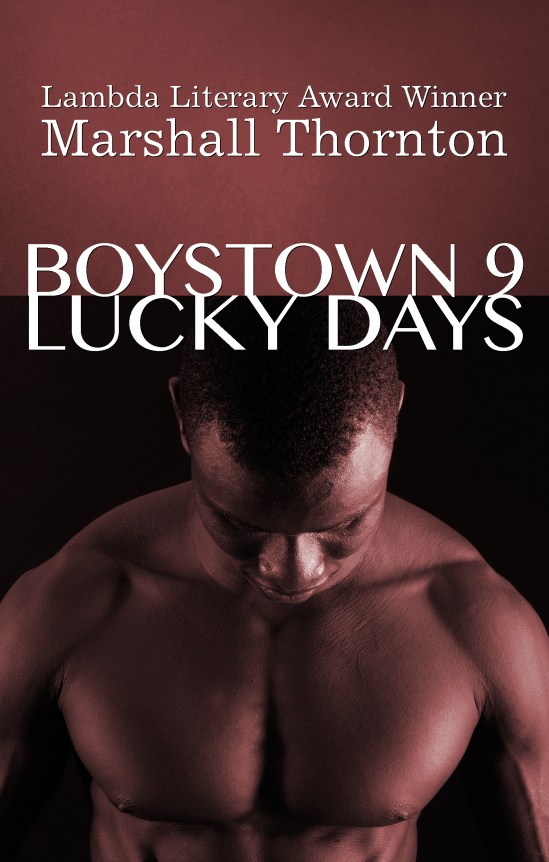
Boystown 9: Lucky Days is now available.

boystown-9-cover_edited-1

In the ninth book of the bestselling mystery series, a young man wakes up covered in blood and no memory of the previous night. When hypnotism doesn’t help, he turns to private investigator Nick Nowak. Meanwhile, the trial of Outfit kingpin Jimmy English begins. Quickly the case begins to unravel when an important witness goes missing and Nick must put his other cases, and his home life, on hold while he goes to Las Vegas to find him.

Available on Amazon and, shortly, on other outlets.


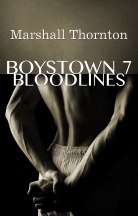
Boystown 7: Bloodlines wins Lambda!

Boystown 7 Cover 2nd Edition2Last night Boystown 7: Bloodlines won the Lambda Award for Best Gay Mystery. Thanks to the Lambda Foundation and thanks to my longtime editor Joan Martinelli and everyone else who’s been so supportive over the years. (I’ll be doing a longer thank you later) …

In the seventh book of the best-selling Boystown Mystery series, Private Investigator Nick Nowak finds himself simultaneously working two cases for his new client, law firm Cooke, Babcock and Lackerby. A suburban dentist has been convicted of murdering her adulterous husband. Nick is asked to interview witnesses for the penalty phase of the trial–and possibly find the dead man’s mistress. At the same time, he’s deeply involved in protecting Outfit underboss Jimmy English from a task force out to prosecute him for a crime he may not have committed. While juggling these cases Nick slowly begins to rebuild his personal life.


Label Me, Please

I first began to understand that I was gay and what that meant in the late sixties. I was around nine or ten. There was a Mike Wallace report called The Homosexuals in 1967. I can’t imagine that my parents would have let me see this at nine years old, but this is what was out there. This is how the world thought in 1967. I do remember reading at least one article in The Reader’s Digest and one or two others in Time Magazine. The image presented of homosexuals was one of a diseased deviate incapable of carrying on a relationship. Needless to say, as a teenager I had a bleak view of what was to become of me.

When I was nineteen, Anita Bryant was big news. Her fight against an anti-discrimination law in Dade County, Florida—a fight she won, keeping an anti-discrimination law off their books for twenty years—was in the newspapers, on the nightly news and on magazine covers. But she didn’t just garner a lot of attention for herself. She also brought to the forefront gay activists. Gay people who boycotted orange juice—for which Bryant was a spokesperson—and campaigned on the slogan “Anita Bryant Sucks Oranges.” They were the ones who caught my attention.

Of course, I was a kid so I don’t remember having the conscious thought, “We can fight back.” And, I certainly wouldn’t have known how to fight back in a small town in Upstate New York. But knowing that there were people out there, embracing the term gay, claiming it, fighting for it, defining it, made things just a little bit easier for me and I began slowly, friend by friend, to come out. To say, “I’m gay.”

In the late 70s, more than two thirds of Americans had a negative view of homosexuality. Today that number is down to around a third. Remarkable progress in less than forty years. So, how did it happen? Did straight people randomly wake up and think, “You know, gay is okay”? No, what happened was someone close to them, a family member, a friend, a parent, a child, a teacher, a co-worker, someone came out to them. Someone stood up and embraced the label “gay” and changed their minds. So, without those millions of people coming out we would not be where we are today. And believe me, coming out and claiming a label are the same thing. You can’t do one without the other.

This morning on Facebook there was a meme attributed to the actor Josh Hutcherson that said, “I’m so sick of saying the words gay and lesbian. Can we just—people. I’m so tired of that. One day I want my son to come home from school and be like, I found this guy and I love him. And I’m gonna be like yes, you do, and that’s okay.” I don’t dispute that Hutcherson is a wonderful ally to the gay community, and I can’t argue that it isn’t a lovely sentiment that we might live in a world were it wouldn’t matter. I do, however, find statements like this one, which happen all the time, problematic.

Rejecting labels, whether it’s done by a straight ally—who, granted may be weary of our constant struggle to find inclusive words or acronyms that actually make all people feel included**—or a young celebrity who doesn’t want to label themselves and so attacks the idea of labels—which is quite likely a marketing ploy meant to keep a gay audience without losing a straight one—these acts, these statements erase the millions of people who stood up and claimed their label. These statements erase the very people upon whose shoulders we stand on.

It is vitally important that we all remember our history. Today didn’t just happen; it’s result of all our yesterdays. So, if you’re a straight person who wants to be an ally, it’s okay to do that because people labeled themselves. If you’re a straight person who wants to write about gay people, it’s okay to do that because of the gay people who took that label. If you’re a gay person and struggling to come out, as hard as it can still be, it is easier because of the people who came out before you—we’re still out there, ask for help if you need it. If you’re a gay celebrity, don’t crap on labels to make a buck—be honest or don’t be honest, up to you, but stop dissing labels. And to gay celebrities who come out after twenty years in the business, don’t let people rush to label you a hero, the real heroes are the people who embraced their labels and by doing so gave up an acting career, a music career, a career in journalism, or sports, or whatever else they were denied because they were honest about who they are—you can become a hero, but you do not get to start there.

Labeling matters. It’s how we got to where we are. I’m gay. That’s my label.


**In the ’70s and ’80s the word gay was used inclusively. Given the historical nature of much of the blog, I decided to use the word gay in that inclusive way, rather than use the QUILTBAG or the word queer. Since each can be as divisive as they are inclusive.