Half Double Murder is out very soon….
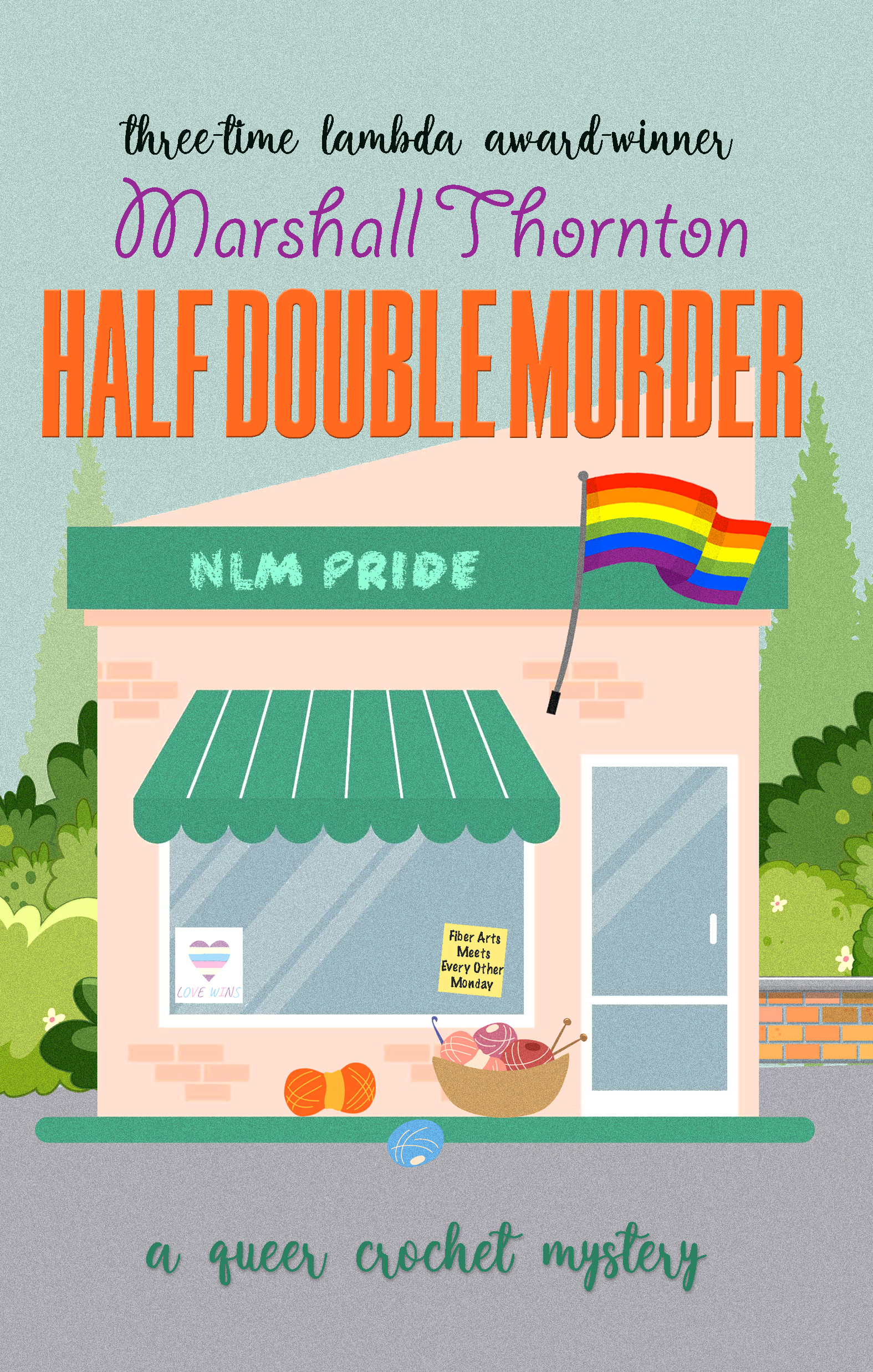
In the fall of 2024, I took up crochet. I quickly realized the best use of this hobby would be to write a queer crochet mystery. So, I did:
When a troubled teen named Brown and a senior citizen named Chester meet at an LGBTQ fiber arts group, they both want to crochet sweaters. But yarn, hooks and needles are set aside when the director of The Center is accused of murdering the owner of a neighboring hair salon who posted transphobic attacks on social media. Brown, Chester and the rest of the fiber arts group set out to prove their friend’s innocence. He is innocent — right?
Receiving an Editor’s Pick distinction from Booklife, the review had this to say, “Thornton underpins his cozy fiction with poignant reality, expertly alternating the first-person narration between the sharply observant Brown, who seeks safety by making herself invisible, and an overdramatic, big-hearted Chess, who realizes the value of going back to frog the mistakes of his quietly eventful life. By bringing this tough and tender duo together to seek justice, Thornton transforms Half Double Murder into a thoughtful, twisty mystery that’s built from hard-won connections.”
Kirkus Reviews had this to say, “Thornton has crafted his novel with the same care and attention to detail as the people at the NLM Pride Center crocheting a sweater. The characters are both endearing and complex, the pace is brisk and consistent, and the mystery itself manages to be both provocatively political and purely entertaining. The narrative is original, captivating, and unwavering in its heartfelt message: Community is everywhere for those who seek it.”
Half Double Murder will be available in ebook, trade paper, hardcover and audio.
The Pink Gets Great Review
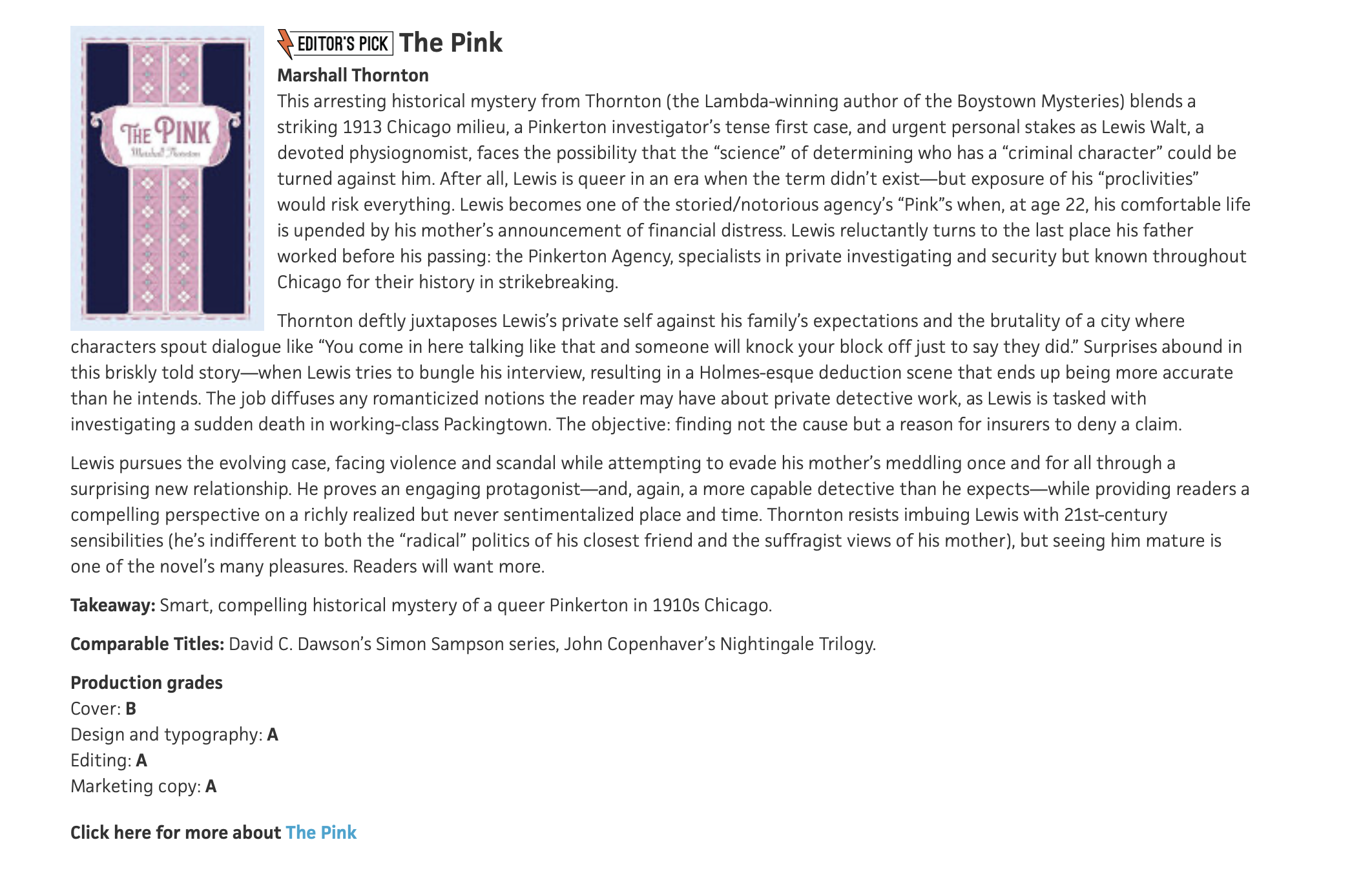
That may be hard to read, so here it is again….
This arresting historical mystery from Thornton (the Lambda-winning author of the Boystown Mysteries) blends a striking 1913 Chicago milieu, a Pinkerton investigator’s tense first case, and urgent personal stakes as Lewis Walt, a devoted physiognomist, faces the possibility that the “science” of determining who has a “criminal character” could be turned against him. After all, Lewis is queer in an era when the term didn’t exist—but exposure of his “proclivities” would risk everything. Lewis becomes one of the storied/notorious agency’s “Pink”s when, at age 22, his comfortable life is upended by his mother’s announcement of financial distress. Lewis reluctantly turns to the last place his father worked before his passing: the Pinkerton Agency, specialists in private investigating and security but known throughout Chicago for their history in strikebreaking.
Thornton deftly juxtaposes Lewis’s private self against his family’s expectations and the brutality of a city where characters spout dialogue like “You come in here talking like that and someone will knock your block off just to say they did.” Surprises abound in this briskly told story—when Lewis tries to bungle his interview, resulting in a Holmes-esque deduction scene that ends up being more accurate than he intends. The job diffuses any romanticized notions the reader may have about private detective work, as Lewis is tasked with investigating a sudden death in working-class Packingtown. The objective: finding not the cause but a reason for insurers to deny a claim.
Lewis pursues the evolving case, facing violence and scandal while attempting to evade his mother’s meddling once and for all through a surprising new relationship. He proves an engaging protagonist—and, again, a more capable detective than he expects—while providing readers a compelling perspective on a richly realized but never sentimentalized place and time. Thornton resists imbuing Lewis with 21st-century sensibilities (he’s indifferent to both the “radical” politics of his closest friend and the suffragist views of his mother), but seeing him mature is one of the novel’s many pleasures. Readers will want more.
The Pink releasing April 28th.
Lambda-Award winning author of the Boystown Mysteries, Marshall Thornton transports readers to early 20th-century Chicago, an era of developing queer subculture, a growing temperance movement and a legendary detective agency.
It’s 1913. Lewis Wait lives with his mother and hides behind scholarly texts, until his conservative middle-class life is thrust aside due to financial woes. Without his consent, Lewis’ widowed mother arranges an interview for him with his father’s last employer: the famous and unscrupulous Pinkerton Detective Agency. But his mother doesn’t stop there, she’s determined to find her son a wife among her fellow temperance ladies.
Intending to fail so he can return to his studies, Lewis instead discovers a natural talent for deduction. Will he embrace a life as a Pinkerton agent? Amid this, his mother’s latest romantic possibility has a few surprises of her own, offering a kind of life he has not considered, as he solves cases that begin to endanger his very life.
A Winter of Discontent for Henry Milch is now available!

In the fourth book of the Wyandot County Mysteries, Henry Milch has his hands full. Literally. His mother has mysteriously run off, leaving his baby sister in his care. He, with the help of his grandmother and her friends, juggles diapers, feedings, and constructive playtime with his new job as an investigator Hamlet Gilbody. His first assignment, looking into a local woman who is suing a winery suddenly becomes a lot more complicated when the woman’s corpse is dumped in front of the tasting room.
A Week Away

Coming April 28, 2025
“You’re my dad.” That’s the first thing teenager Cass Reilly says to Dom after crashing his housewarming party. The boy is not his son, but could throw Dom’s life into complete disarray by exposing his false identity. Cass agrees to let Dom be if he helps find the killer of the real Dom Reilly. He wants to kill him. That leads Dom and Cass to Reno and then to Detroit where he encounters Cass’s larcenous mother, his mob-connected family and eventually the killer himself. Dom struggles to keep the kid from murdering anyone while trying to protect the life he loves.
The Ghost Slept Over on sale for Valentine’s Day
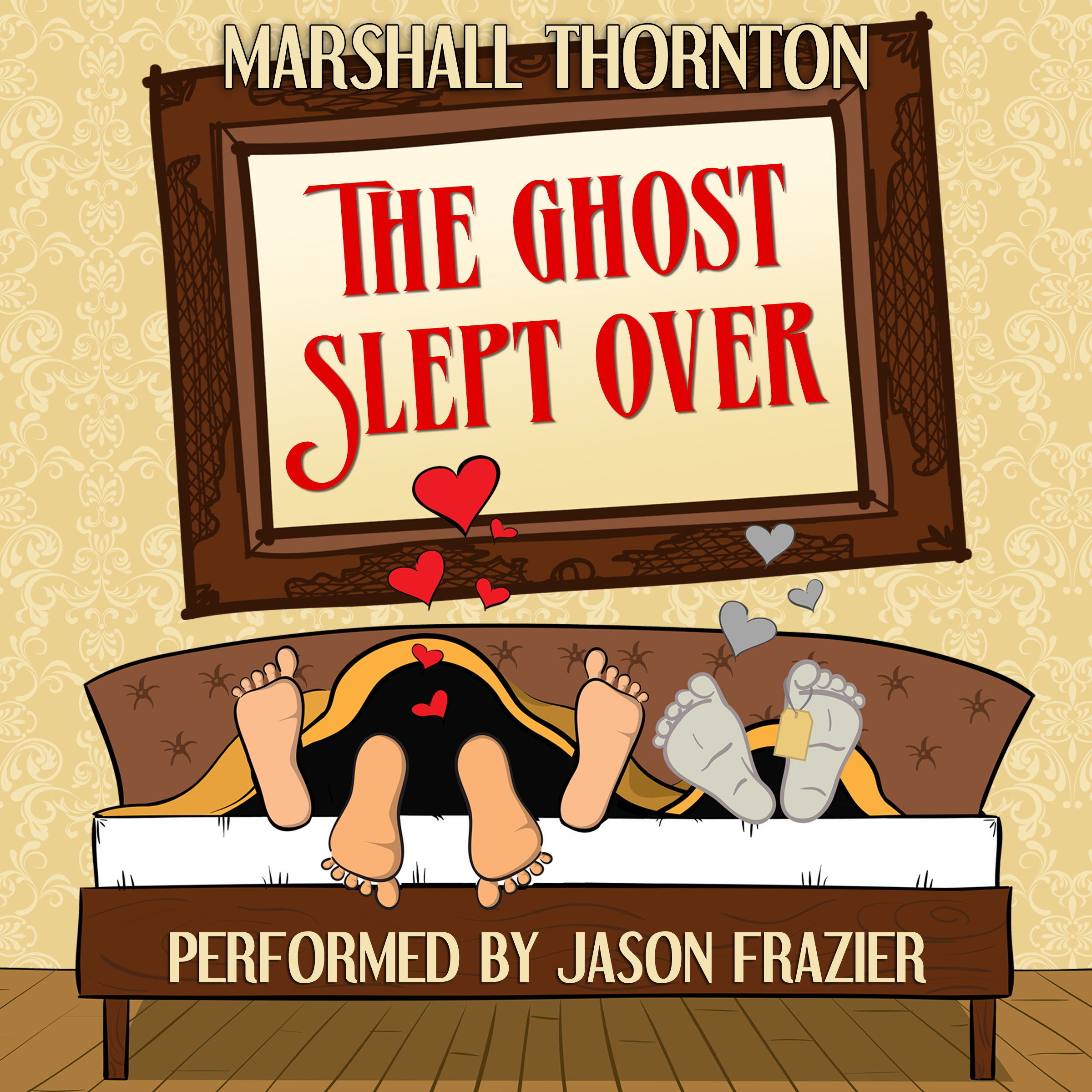
A ghostly romantic triangle!When failed actor Cal Parsons travels to rural New York to claim the estate of his famous and estranged ex-partner he discovers something he wasn’t expecting…the ghost of his ex! And, worse, his ex invites Cal to join him for all eternity. Now. As Cal attempts to rid himself of the ghost by any means he begins to fall for the attractive attorney representing the estate. Will Cal be able to begin a new relationship or will he be seduced into the ever after?
Runner Up 2014 Rainbow Awards – Best Romantic Comedy
Pinx Video #7 is now available.

In the seventh book of the Lambda-Award winning Pinx Video Mystery series, Noah and his friends are on their way to a taping of the Kapowie! reunion show. As a teenager, Marc was a cast member. He’s convinced the producers to hire partner Louis to handle craft services for the all-night shoot. Noah and the new guy at the video store, Eldridge, tag along as helpers. Things go swimmingly, until movie star Finn Henderson takes a drug overdose and they all become trapped in the sound stage—possibly with a killer!
99 cents this week…
Red, White and Royal Blue meets Fellow Travelers!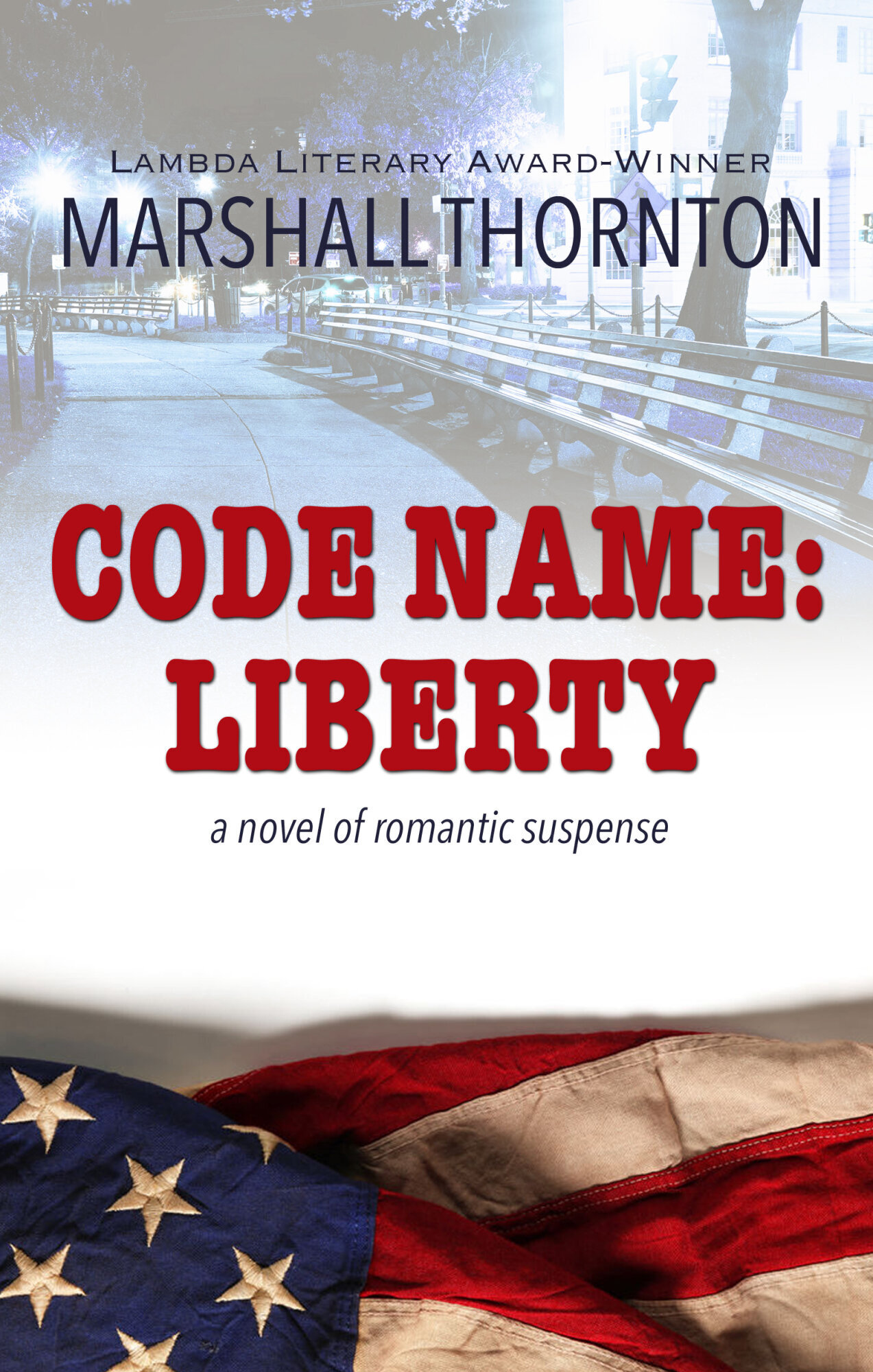 |
| “Now you can say you’ve kissed a prince.” In the summer of 1980, the news is full of the upcoming election and the hostage crisis in Iran but Patrick Henry Burke is not paying any attention. He’s met a Persian prince and his head is full of romance. All of that changes though when a sexy CIA agent, Gary Walker, approaches him and asks that he spy on the prince and his father. They’re attempting to prevent the hostages from being released to guarantee Carter won’t win the presidency in hopes that the Reagan administration will be grateful enough to assist the prince’s father in becoming the new Shah of Iran. As Patrick gathers information about an impending illegal weapons deal, he struggles to understand who might be lying to him and who might be telling the truth. Finalist for Best Gay Romance Lambda Awards 99 cents at AMAZON 99 cents EVERYWHERE ELSE! |
Available now! In ebook and trade paper. Hardcover coming.

In the third book of the Dom Reilly series, Dom is happy. He and his boyfriend, Ronnie, are working on the co-op they recently bought, he has good friends, and things at The Freedom Agenda are working out well. Having decided to take the Larry Wilkes case, he and attorney Lydia Gonsalez need to find a way to get their client out of prison. Meanwhile, attorney Edwin Karpinski asks Dom to look into a fifty-year-old murder. While juggling the two cases, he also deals with a nagging injury, a surprise visit from old friends, and some unexpected danger.

